News
Discover-Eat 2026 Explores Gastronomy as a Driver of Rural Tourism in Sigüenza
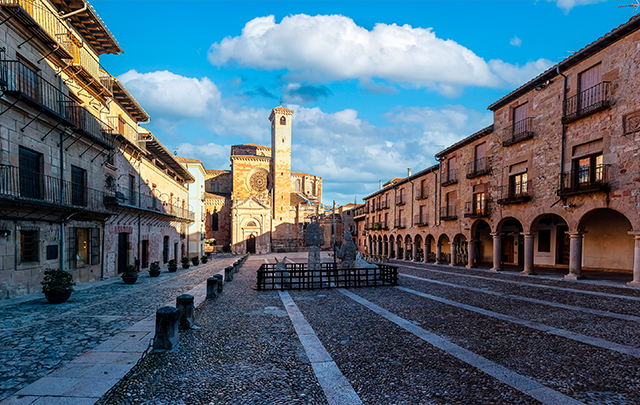
The Second International Congress on Non-Urban Gastronomic Destinations transforms Castilla-La Mancha into a global forum for a form of tourism capable of revitalizing regions and offering memorable experiences
The 2nd International Congress on Non-Urban Gastronomic Tourism: Discover-Eat, organized by Vocento Gastronomía and the Government of Castilla-La Mancha, will bring together leading figures from Europe, Latin America, and the United States in Sigüenza from June 29 to July 1 to discuss how to create competitive tourist destinations based not only on cuisine, local produce, and cultural identity, but also on memory, the senses, a passion for the region, and sound business practices capable of generating wealth in their local communities. Today’s traveler no longer seeks merely to eat well; they want to know who produces the food, understand where the flavors come from, participate in activities, experience unique places, and take a story home with them.
This second edition will feature, among others, Erik Wolf, founder and CEO of the World Food Travel Association (Portland, USA), one of the most influential international voices in culinary tourism; Linsey Gallagher, president and CEO of Visit Napa Valley (California, USA), who leads the organization that has helped establish Napa as one of the world’s leading wine tourism brands; Hubert Gonera, CEO of Landbrand and author of the Polish National Gastronomic Tourism Strategy; Orazio Belletini, director of the Fuegos Foundation and a key figure in the bid for Manabí (Ecuador) to be named a World Gastronomy Region for 2026; and Franco Di Iorgi, master gelato maker at Gelateria Ercole in Pizzo and keeper of the secret of the Tartufo di Pizzo, which draws international travelers to his town.
Among the forum’s key themes is the idea that small municipalities can compete if they do not try to imitate other destinations—that is, if they are able to turn their uniqueness into a valuable experience. Napa Valley, Calabria, Manabí, Alto Tâmega, Islay, Sigüenza, Ulldecona, La Aguilera, Bullas, Ribeira Sacra, Elciego, La Guardia, Cogolludos, and Porzuna are cited as examples of a trend that highlights destinations with their own distinct identities. This second edition will once again bring together chefs, hoteliers, producers, winemakers, destination managers, communicators, researchers, and institutional leaders around a central idea: gastronomic tourism can become a real tool for transformation in many regions.
The event offers a contemporary perspective on gastronomic tourism. It is not merely about discussing restaurants or products, but about understanding how a region can build a recognizable identity based on the people who live there. At a time when many destinations are seeking to differentiate themselves beyond traditional tourist circuits, Discover-Eat poses a fundamental question: Can a restaurant, a winery, a cheese shop, a product, or an experience under the stars convince a traveler to choose a place that was not previously on their radar?
The program’s response revolves around three main themes: the transformative power of gastronomic tourism, authenticity as a competitive advantage, and the region itself as an experience. The conference will argue that tourism success should not be measured solely by visitor numbers or economic impact, but by local well-being, heritage preservation, and the creation of opportunities for those who live in the destination year-round. This perspective is particularly relevant for areas seeking to combat depopulation and attract visitors outside of peak seasons.
The integration of tourism resources will be another key focus. The forum will demonstrate how wine tourism can intersect with astronomy, how cheese can revitalize rural routes, or how a music festival centered on whiskey can bring global visibility to an island. Discover-Eat 2026 thus aims to establish itself as an international meeting point for those who understand that the future of rural tourism lies in proposing a modern, ambitious, and deeply regional approach to gastronomic tourism: a way of traveling that is not limited to merely consuming places, but rather seeks to understand them.
Monday’s session will be dedicated to the transformative power of gastronomic tourism. It will open with a presentation by Erik Wolf. As the founder of the World Food Travel Association, Wolf will offer an international perspective on how gastronomy can help make regions more livable, attractive, and capable of generating opportunities. Next, Sara Sánchez Remacha, CEO of Rusticae, will address the concept of “storyliving” and experiences with soul. Her track record at the helm of one of Spain’s most renowned hotel brands specializing in charming accommodations and experiential tourism makes her a particularly relevant voice when discussing hospitality, authenticity, and emotional connection with travelers.
The session on gastronomic towns will feature two cases of great symbolic value: Sigüenza, represented by Enrique Pérez, chef at El Doncel*, and Ulldecona, with Vicent Guimerà, chef at L’Antic Molí*. These are two towns with a combined population of just 6,500, each boasting two Michelin-starred restaurants. At El Doncel, Pérez has developed a culinary style rooted in seasonality, local produce, and collaboration with small-scale producers, highlighting signature ingredients such as inland salt, grains, and game. Guimerà, for his part, restored an old flour mill in the Ebro Delta and transformed it into a leading destination for slow food cuisine.
One of Monday’s most unique moments will feature Franco Di Iorgi, master ice cream maker and owner of Gelateria Ercole in Pizzo, Calabria. His presentation, focused on the Tartufo di Pizzo, will demonstrate how an artisanal product can be worth the trip. Di Iorgi embodies the strength of family-run businesses capable of transforming a local specialty into an international icon that attracts thousands of visitors each year.
Linsey Gallagher will take center stage in the discussion on building global gastronomic brands. Her experience leading the official destination management organization for Napa will allow her to analyze how a region is promoted until it becomes a global tourism brand. The regenerative approach will be presented by Hubert Gonera, CEO of Landbrand, author of Poland’s National Gastronomic Tourism Strategy, and a certified professional in sustainable tourism. Gonera will put forward a key idea: it is not enough for tourism simply not to cause harm; the challenge is for it to improve the lives of those who live in the destination.
Manabí: From Destruction to Gastronomic Capital
Monday’s professional session will conclude with Orazio Belletini, director of the Fuegos Foundation, an agronomist trained at institutions in Ecuador and Harvard, and a central figure in the collaborative effort to establish Manabí as a World Gastronomy Region 2026—a project that began amid the destruction caused by the earthquake that devastated the region in 2016 and has involved the entire community.
Tuesday will focus on authenticity as a competitive advantage and will be centered at Bodega Río Negro in Cogolludo. The day will open with Natasha Nedanoska, a chef, farmer, and owner of Pirustija Nedanoski Agritourism (Ramne, North Macedonia). Her project, located in Galichica National Park, transforms a family home and farm into an immersive experience of Balkan rural life: harvesting produce from the garden, baking bread, preparing traditional peasant dishes, and sharing a communal table where centuries-old recipes blend with the stories of the community.
Next to speak will be Vítor Adão, chef at Plano in Lisbon and driving force behind the Alto Tâmega project in Tras-os-Montes. Born in a village in Chaves, Adão has brought to haute cuisine and television a perspective deeply rooted in shared meals, memory, and taverns as spaces of identity. His work at Alto Tâmega exemplifies how the revitalization of traditional places can generate unique gastronomic experiences and economic revitalization.
The integration of industry, gastronomy, culture, and communication will be explored through the case of the Fèis Ìle Festival on Islay, Scotland. Participants will include Florence Grey, head of the festival’s organizing committee at The Islay Festival Association, with over a decade of experience in event management in remote areas, and Ben Shakespeare, a photographer specializing in whiskey, distilleries, and brand storytelling. Both will demonstrate how a single product—whiskey—can foster a 360-degree approach to culinary tourism.
Communication as a tool for regional revitalization will be the focus of the presentation by Marta Iglesias, a content creator at @martaiglesias_ and @unlugardelaribera, a publicist and entrepreneur selected as one of the 100 Young Talents in Gastronomy 2026. At just 21 years old, Iglesias is the founder of a gastronomic communications agency. She has transformed her project “Un Lugar de la Ribera,” created alongside her sister Esther, into a hub for preserving and promoting the identity of the Ribera del Duero region from a generational perspective.
Tuesday’s program will also spotlight astro-tourism and the ability to create experiences that can only take place in a specific location. Juan Jesús Valdelana, CEO of Bodegas Valdelana, a winegrower, winemaker, and representative of the thirteenth generation of a winery founded in 1583 in Elciego, will explain his “stellar pairings,” which combine wine tastings with stargazing. Joining him will be Blanca Moreno, director of the Molino de Alcuneza hotel—a member of Relais & Châteaux and a key part of a family project that has transformed an old mill into a benchmark for Michelin-starred gastronomic hospitality. Also participating will be Susana Malón, a physicist specializing in light pollution and night sky quality.
Rural revitalization through the world of cheese will have its own table, complete with a tasting. Participants will include Jesús ‘Suso’ Mazaira, partner and co-founder of Airas Moniz, a pioneering project in Lugo dedicated to making cheese from raw milk from Jersey cows raised on extensive pastures; Juan Ocaña Mateo, a goat herder, cheesemaker, and advocate for traditional grazing at Quesos Crestellina in Casares, who has transformed his business model with experiences at the cheese factory and the cheese bar; José María Alonso Ruiz, owner of Quesoba and president of QueRed, a leader in artisanal cheese and experiential tourism linked to agri-food culture; and Luis de la Vega, from Quesería Finca Valdivielso.
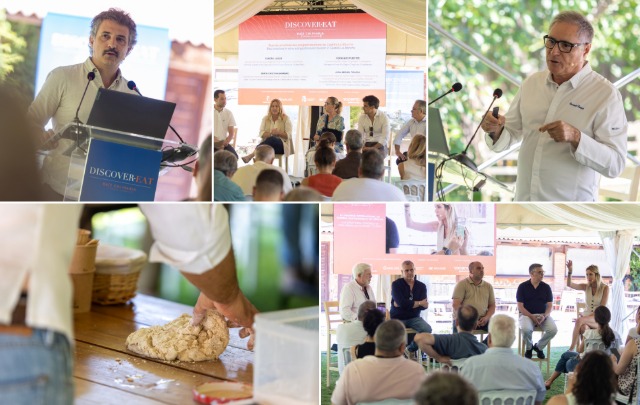
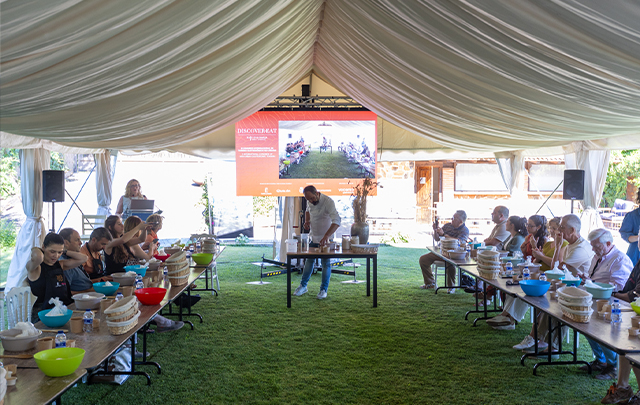
The third day, titled ‘The Future of Rural Gastronomic Tourism’, will be held outdoors at the Molino de Alcuneza. The morning will begin with an artisanal bread workshop led by Samuel Moreno, chef at Molino de Alcuneza*, one of the leading chefs in Castilla-La Mancha. Moreno has developed a culinary style deeply rooted in the region, with a special focus on bread, baking several varieties daily as part of his gastronomic offerings.
The development of a premium gastronomic region will be the topic of Carmelo Bosque, chef and owner of Lillas Pastia* in Huesca. In addition to his culinary work, Bosque has distinguished himself for his ability to mobilize institutions and the culinary profession around regional projects, such as his efforts to bring the 2026 Michelin Stars Gala to Huesca.
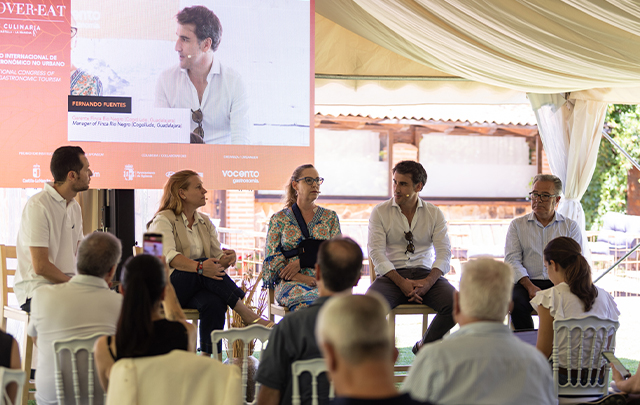
A historical perspective will be provided by Felipe Vidales, who holds a Ph.D. in Modern History and a European Doctorate from the Complutense University. His presentation on the travelers of the Grand Tour and how their gastronomic and astronomical interests are reflected in their travel journals will connect historical memory with tourism narratives from both an educational and academic perspective. Wine and food tourism in Castilla-La Mancha will have a dedicated session featuring Sandra Luque from Pago del Vicario in Porzuna, Ciudad Real; María Cristina Barrero from Bodega Martué in La Guardia, Toledo; and Fernando Fuentes from Bodega Río Negro in Cogolludo, Guadalajara. This session will explore how the region’s wineries and wine tourism projects are creating enriching experiences that combine wine, landscape, architecture, social interaction, and hospitality.
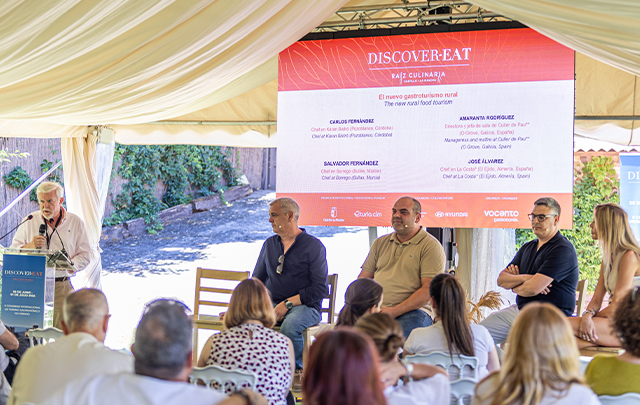
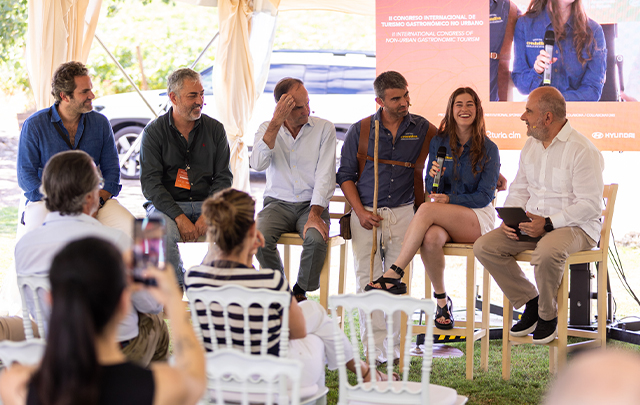
The forum’s thematic conclusion will feature the roundtable discussion “The New Rural Gastronomic Tourism,” with the participation of Carlos Fernández, chef at Kàran Bistró in Pozoblanco, Valle de los Pedroches; Salvador Fernández, chef and owner of Casa Borrego in Bullas; Amaranta Rodríguez, director and maître d’ at Culler de Pau** in O Grove; and José Álvarez, chef at La Costa Restaurante* in El Ejido.
Discover-Eat 2026 will not be limited to its extensive program of presentations. The event’s offerings include regional immersions, visits to sites showcasing historical heritage, gourmet lunches and dinners, a tour of a lavender field, and a nighttime stargazing experience. This conference returns to Sigüenza with a clear goal: to demonstrate that gastronomy is no longer just a complement to travel, but a compelling reason to embark on a journey. Those wishing to attend the presentations can register on the official website, https://discovereat.es/.
Related news
News
Discover-Eat charts a course towards better gastronomic towns and regions with a bright future
News
Gastronomic tourism as a lifeline for the countryside
News
Wine tourism is being reinvented in Castilla-La Mancha: from the cult of wine to enjoyment without snobbery
News

When Spain didn’t know how to market its cuisine or its stars
News

Huesca: a hub for haute cuisine and radical hospitality
News
Bread, that great unknown
News
Rural tourism is also looking to the stars for allies
News
Rural tourism and artisan cheeses: how the Spanish countryside is reinventing itself
News
Astrotourism and dark skies: when the countryside becomes cosmic luxury
News